The Retinal Restriction – The Truths, Dangers & Future of Retinal in Australia
Disclaimer: the views in this op-ed are those of the individual author/s and do not represent the official policy or position of Arktastic.
The Ban Announcement
In a nutshell: retinal in Australia has been banned for general import, especially in cosmetic use for Australians.
In the end of June, there was an immediate announcement by Australian Regulatory agency AICIS (Australian Industrial Chemicals Introduction Scheme) who oversee all the chemicals and agents that are generally important and used in the country.
If it feels sudden, that's because it really was. The announcement was decided by the regulatory group on the 25th of June and put into action on 27th of June, that any skincare product containing retinal (or retinaldehyde) was banned from entering the nation, unless it met very specific criteria!

What's this criteria you ask? Well, they moved retinal from being under a ‘safe’ criteria to the level up, meaning it is ‘no longer low risk for import and cosmetic use.’
This means companies who are looking to bring in products containing any amount of retinal (no matter how small) must:
- Apply for a explicit AICIS Assessment Certificate
- Fork out a minimum of $24,100 for assessment of their cosmetic product and its safety profile
- Get approved that your product is indeed safe for import (implying you should provide safety data either in the form of human or animal testing).
AICIS claims that retinal is just not proven to be safe enough for continued use in the public (but retinol is ok). What's the truth here? Why has Australia prohibited retinal use, but the UK has stopped retinol use. What's going on?
In summary, you're going to see a lot less retinal available on the market and supplies will start to dwindle.
The Science of Retinal (Is it Dangerous??)
Topical retinal (retinaldehyde) has been used in a variety of cosmetics for over two decades, with known benefits for fine lines, wrinkles and improving photoaged skin. You've probably seen it a bunch!
It has a known ability to irritate skin when in high concentrations, causing what's known as ‘retinoid dermatitis.’ This can range from redness, burning, peeling of skin and itching. Thus, retinoids are typically in very low concentrations in formulas (especially over-the-counter ones) and have been shown in repeat studies to be safe in 0.1% concentrations. This means that, apart from risk of burns, there is no toxicity for your average user.

But if its safe for general use, why the ban? This is cited by AICIS as being due to ‘developmental toxicity.’
This is because studies going back to the late 1990s have shown that high-dose retinoids when taken orally cause developmental problems to a baby when a woman is pregnant. It's toxic to growing babies - which is why if you've ever been prescribed oral or high-strength topical retinoids a doctor emphatically asks if you could be pregnant.
Oral retinoids have, for a long time, been documented as being able to interrupt gene signaling and expression, risking malformation of a baby’s bones, nerves and brain. It's an area of medicine that doctors are very careful of and is screened for during pregnancy.

If you've read our Guide to K-Beauty during Pregnancy, we warn against using topical retinoids (but all kinds of retinoids - retinol, retinal, tretinoin). This is basically as a precaution, as although retinoids can be toxic they don't absorb well into your system from the skin.
Therefore, Vitamin A tablets during pregnancy is a big NO! But topical retinoids have not been shown to have the same impact, especially in the ‘safe levels’ that cosmetics are limited to to prevent retinol burns.
In fact, a study from 2026 came from the EU this year, which showed women using topical retinoids whilst pregnant did not show an increased risk to their baby.
Simply put, there is not enough data to conclude topical retinoids are 100% safe to use in pregnancy, but there's been no proven danger either.
Why is it hard to prove a cosmetic is safe in pregnancy?
So, to get your cosmetic on the market you just have to provide data that it's safe for pregnant users. Sounds easy right?
Well, no. Any tests or studies in general require specific criteria to make sure it's ✨ethical✨. Which is generally great, but incredibly difficult in pregnant patients. That's why we know retinal is safe for use in your average Joe, even down to specific concentrations and formulas.
But experimenting on an individual and their unborn baby is incredibly tough to sell. In fact, there's a variety of drugs and medications that we try to absolutely never use in pregnancy, just because we don't know if its safe. Trying to get a study approved just to see if it can improve someone's fine lines just doesn't take precedence.
The Impact on K-Beauty in Australia
To get around this, AICIS has recommended animal trials and testing of cosmetics. Regardless of how unethical animal testing generally is, it means that Korean beauty especially is going to take a hit.
Why? Animal testing for cosmetics is hardlined banned in South Korea. Although its allowed for medical circumstances, it really won't be allowed for your face cream. Therefore, all your favourite brands are not likely to jump through these specific hoops, just to reach the Australian market.
And for smaller business importing these cosmetics (like us!) it's just going to be easier to stop importing these products to stay inside regulations.

Why is Retinol Not Banned?
So, does this mean retinol is safe in pregnancy? Well, no. There's only one step between retinol and retinal in the final development of its active form ‘Retinoic Acid.’ It means that retinal typically works faster and has a higher concentration, but retinol is not laughably different.
Pathway:
Retinol → Retinal → Retinoic Acid
Ok, why isn't retinol part of the same ban? AICIS acknowledges that the same ‘risks’ exist with retinol, but it is not subject to the same ban. Why?
It's probably arbitrary. As much as I'd love to think these regulatory bodies act with perfect scientific knowledge, it just is a strange choice to place a ban on an ingredient that has no demonstrated risk in safe quantities in majority of the population, and a theoretical risk in pregnant individuals. Because if retinal really poses a risk, then retinol is in the same basket.
The EU placed a strict limit on the import of retinol, for example, that does not apply to retinal products in 2024.
Canada has a similar limit for retinal, but it is only based on concentration (which caps over-the-counter cosmetics), which makes good sense.

Having read the AICIS Evaluation Statement (from April 2026), it's clear they don't have a new smoking gun that triggered this response. If anything, the safety data for cosmetics has really improved over the last decade.
Their evaluation contains a majority of animal trials from the late 1990s which prove a known fact; that retinoids are dangerous in high doses (regardless of oral or topical use). And they acknowledge that the risk of retinal in these low concentrations has not been proven in any directly known study for pregnant individuals.
Why is Retinal Really Banned?
I'm not going to lie. The chances that this ban and sudden limitation of retinal is going to protect pregnant individuals is fairly low. But I don't think that was really the purpose.
Again, referring to the AICIS evaluation, it seems more likely they were concerned about the exposure of pregnant individuals to concentrated retinal in factories and cosmetic production here in Australia. And that is indeed a worthy cause to be concerned about (although it may seem niche).
But it does limit a variety of some of our favourite Korean beauty products from the general market. Stock is likely to dwindle and reduce, especially as there is a complete blanket ban on any retinal sneaking through (even if the amount is incredibly dilute).

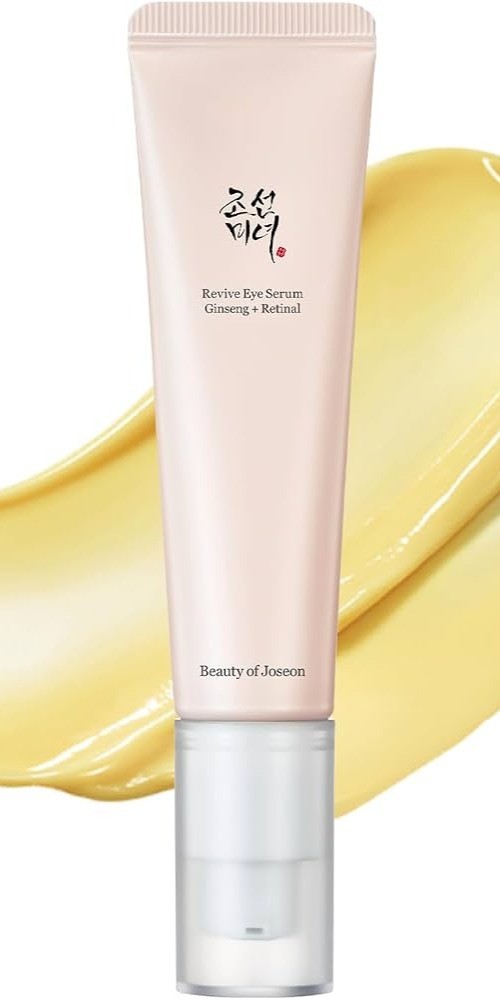
Although incredibly strict, I believe there's hope that the restrictions will relax a little, especially considering retinol is still free for use throughout. Any change that is snapped into place quickly typically tends to be revised and amended just as quickly, so we will just have to wait for news.
In the short term, it does mean our restocking team has stopped the import of K-beauty products containing retinal and once they are sold out they can't be replenished. We are hoping for change or updated protocols that follow geniune health advice, but that's all we know for now.
TLDR; Summary of Retinal Restrictions
- Cosmetics of any kind containing retinal have immediately been prohibited for import into Australia.
- This is due to a theoretical risk of these cosmetics to pregnant individuals.
- Individual products can still be imported, but require explicit clearance and safety data handed to AICIS.
- Since proving a product containing retinal has no ‘developmental toxicity’ (i.e. danger to pregnant individuals) is really hard (hasn't been done internationally yet), chances are a lot of products will disappear from shelves.
- Pregnant individuals should avoid any products containing retinoids (including retinol) just to be safe.
- There are no current studies showing danger of cosmetic concentrations of retinal to pregnant individuals (i.e. above the point where you are risking retinoid burns to your skin).
If you are not pregnant (or currently planning), you can continue to use your retinal-containing products with peace of mind. They are indeed safe at cosmetic levels, as long as you are using them correctly (not overusing!)
If you are after some alternatives to help improve fine lines; check out vitamin C, peptide products or soothing bakuchiol.
Check out our other blogs to keep your K-Beauty knowledge up-to-date and catch the latest scoops to keep your skin looking stunning 🔥
Want to check our other deep Korean beauty scoops covered by this blog? Check out our dive into the world of fake K-Beauty and its prevalence in your routine. Or check out our comparison of Australian beauty & K-beauty.
FAQ - The Retinal Restriction – The Truths, Dangers & Future of Retinal in Australia
Is retinal banned in Australia?
Not exactly. From 27 June 2026, AICIS reclassified retinal so it can no longer be freely imported for cosmetic use — importers now need an assessment certificate. The practical effect is that many retinal products will disappear from shelves.
Is retinal safe to use?
For most people, yes. At the low concentrations used in cosmetics (around 0.1%), retinal has no established toxicity beyond a risk of skin irritation. The restriction is based on a theoretical developmental risk in pregnancy, not proven harm to the general population.
Can I use retinal while pregnant?
As a precaution, avoid all retinoids — retinol, retinal and tretinoin — during pregnancy. There’s no proven danger from topical use at cosmetic levels, but there isn’t enough data to declare it fully safe either.
Why is retinol still allowed but not retinal?
AICIS acknowledges retinol carries similar theoretical risks, yet it isn’t subject to the same requirement. There’s no clear scientific reason for treating them differently, given how closely related they are.
What are alternatives to retinal for fine lines?
Vitamin C, peptides and bakuchiol are all effective, gentler options for targeting fine lines and photoaged skin.